|
Waste
Notes
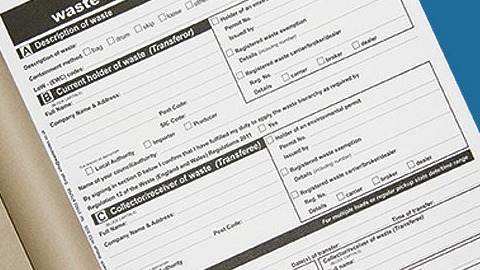
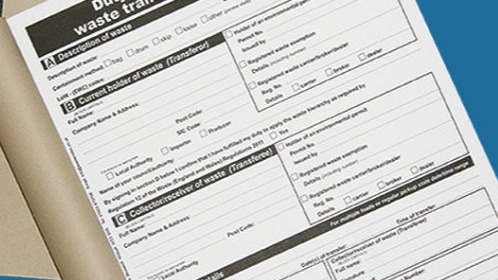
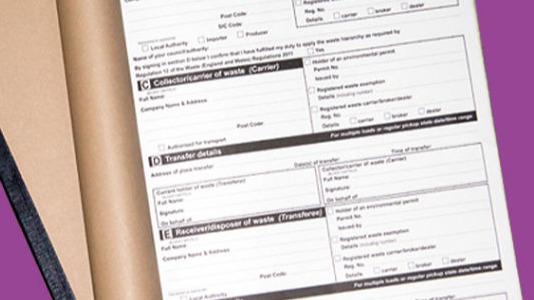
A Waste Transfer Note (WTN) or more accurately a
Duty of Care Controlled Waste Transfer Note is a document that must
be completed when waste is transferred from one party to another.
If a waste transfer note is not completed during the transfer of
a controlled waster you are almost certainly breaking the law.
From
28 September 2011,
a waste transfer note must include:
A declaration that you have applied the waste management hierarchy,
which means the transferor must consider reusing or recycling the
waste before deciding to dispose of it. See
Waste Management Hierarchy.
The
2007 Standard Industrial Classification (SIC) code of the person
transferring the waste - find SIC codes on the
Companies House website.
N.B
after the 1st October 2011 use the 2007 SIC code not the 2003 code.
If the waste is hazardous
(hazardous waste includes
everyday objects such a fluorescent tubes) you may need to complete
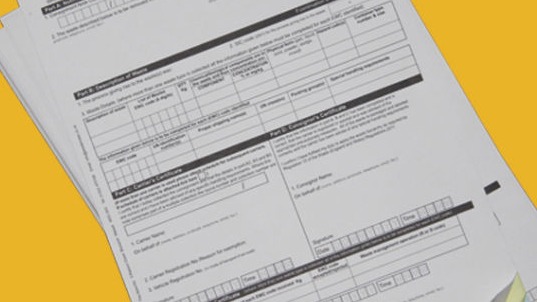
a Hazardous Waste Consignment note (HWCN) or in Scotland a Special
Waste Consignment Note (SWCN). In addition to transport or handle
the waste you may require a waste carriers licence, a waste handling
or waste disposal licence, a pollution prevention and control permit
or be exempt from licencing or registration. Licences are issued
by the Environment
Agency (EA) or in Scotland the Scottish
Environment Protection Agency (SEPA).
Duty
of Care
A legal Duty of Care applies to everyone involved in handling waste.
This includes everyone from the person who produces the waste through
to the person who finally disposes of, or recovers it.
To
fulfil your Duty of Care:
Keep your waste secure
Store wastes in suitable containers or places which will prevent
unauthorised access and prevent it from escaping from your control,
e.g. becoming windblown or leaking out and causing pollution.
Transporting waste
If someone transports your waste:
Check that the person or company removing or transporting your waste
is a registered waste carrier and is authorised to take your waste.
You can do this by:
Checking the Environment Agency public
register
Telephoning the Environment Agency 0845 603 3113
Asking the person or company to show you their waste carriers certificate.
If they cannot prove they are a registered waste carrier do not
give them your waste.
Transporting your own waste:
If you are transporting your own waste to a site for disposal or
recovery - check the site is authorised to take your waste. You
can do this by checking Environment Agency
public register and asking the operator of the site to show
you their exemption registration or environmental permit.
Transporting
waste for others:
When you take waste from someone else you must be sure the law allows
you to take it. Make sure the person giving you the waste describes
it in writing. A waste transfer note must be filled in and signed
by both parties. You must keep a copy of the transfer note for a
minimum of two years.
For more information on registering as a waste carrier click
here.
Waste
transfer notes
When you pass your waste onto a waste carrier or to a waste management/disposal
site you must give the person a duty of care waste transfer note.
You must keep a copy of the waste transfer note for a minimum of
two years.
Controlled
waste transfer notes are used to keep a record of the waste when
it is transported, to ensure it is not dumped illegally or that
illegal or hazardous substances are not disguised as some other
material. Any material not treated correctly can be traced back
to the producer using the paper trail provided by Duty of Care Controlled
Waste Transfer Notes.
A Controlled
Waste Transfer Note is a document which must be completed and accompany
any transfer of waste between different parties. A Controlled Waste
Transfer Note must be created for each load of
waste that leaves your factory/office/yard/shop/warehouse/etc.

Ensure
that description of the waste on documentation is accurate and
describes the waste by reference to the appropriate 6 digit code/s
in the European Waste Catalogue (EWC). The new name for the EWC
is the List of Wastes (LoW).
The LoW provides a more precise method of identifying the type
of waste by listing waste types according to the process or industries
from which they arise. The requirement to refer to the code is
contained in the Landfill Regulations
2002 and also the Landfill (England
and Wales) (Amendment) Regulations 2005. Non-specific terms
such as 'general waste' or 'inert waste' are not acceptable. The
purpose of the description is to allow other people who handle
the waste to know what they are dealing with so that they can
manage it safely and properly.
Please visit “Waste
Management, The Duty of Care, A Code of Practice" for
further details on your duty of care. This pdf document explains
exactly how you can fulfil your duty of care.
This is
only an introduction to the duty of care. It cannot be relied
on as legal advice.
Practical guidance is in “Waste Management, The Duty of
Care, A Code of Practice”, ISBN 0-11-753210-X, published
by the Stationery Office and available from their bookshops or
by telephoning 0870 600 5522.
|